During 1912 to 1949, the Chinese Communist Revolution had taken place, splitting into two sides. One named CCP, short for Chinese Communist Party, and KMT, which was short for Kuomintang. The KMT supported the nationalist, and the CCP supported the idea of communism. The two fought, looking for control over the government and the people.
.jpg)
A picture of Chiang Kai-shek, whom was the leader of the KMT
The Chinese Communist Revolution had started all because the Qiun Dynasty had fallen in 1911, after its 2,000-year reign, causing it to be taken over by a poor government system. It spilt China into two different regions. After two years, tensions high and mighty, two parties formed. One controlled Mao Zedong, which was the CCP, and the other being started but Sun Yat-sen but taken over by Chiang Kai-shek. The KMT had control over cities and elites, but the CCP had control over the poor and workers due to them wanting everything to be ‘fair’.
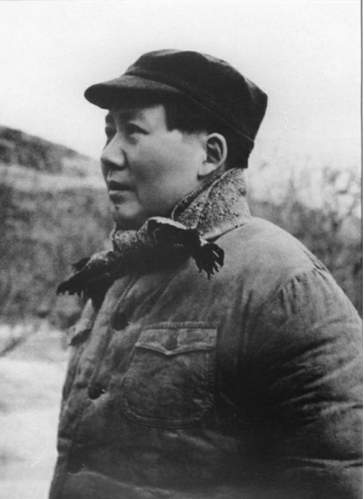
A picture of Mao Zedong, who is the leader of the CCP party
Even though the CCP had almost been destroyed by the KMT, the party kept going. In 1934, the long march took place. The CCP traveling 6,000 miles into northern China. Although many had been lost, it had let the party survive the KMT and became a symbol of unwavering determination and strength of the CCP. They used the poor there to gain support, helping them back on their feet.
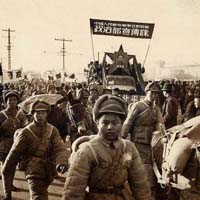
A photo of the CCP party
Not long after the Second-Sino Japanese war, the parties banded together because of the battle, but only for a short while. The KMT had its support weakened because of poor leadership and corruption. The CCP gained creditably because they protected the poor, building more support. After the battle, the two sides went against each other once more.
The war raged until 1949, when the CCP won after gradually chipping at the KMT and destroying them, who fled to Tiwan to set government there. People who were workers, the poor, the lower class saw their rise, as the rich and elite saw it as their downfall. People who were artists, religious leaders, and more were either persecuted or sent to the countryside for labor and or ‘re-education’.